
Cost to Renovate a Small Bathroom
Renovating a small bathroom can cost anywhere from a relatively modest amount for a cosmetic refresh to several times more for a full renovation involving plumbing, tile, waterproofing, electrical work, and higher-end fixtures. The room may be small, but many of the expensive parts of a bathroom renovation—labor, plumbing, waterproofing, and fixtures—still have to be completed.
The most useful way to estimate your budget is therefore not by square footage alone. Start with the scope of work, decide whether the existing layout will remain, identify which fixtures can stay, and then price the major labor and material categories separately.
Quick answer: A small bathroom is not automatically inexpensive to renovate. Keeping the existing plumbing layout and replacing finishes and fixtures usually provides the most predictable route to a lower-cost remodel. Moving a toilet, shower, drain, or supply lines can push the project into a much more expensive category.
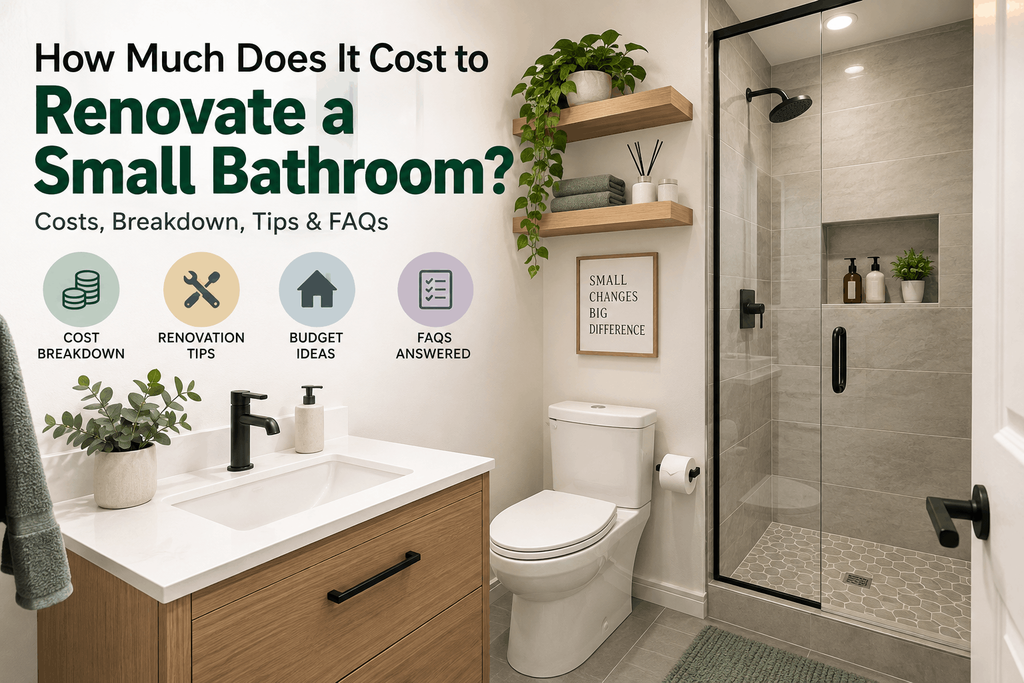
What Determines the Cost of a Small Bathroom Renovation?
Bathroom size matters, but it is only one part of the calculation.
Two bathrooms with almost identical dimensions can have dramatically different renovation budgets. One homeowner might replace the vanity, toilet, flooring, lighting, and paint while leaving the shower and plumbing untouched. Another might strip the room to the framing, move the shower, install new plumbing, waterproof the wet area, and retile the entire space.
The second project can cost considerably more even though the floor area has not changed.
The biggest cost factors are generally:
- Extent of demolition
- Plumbing changes
- Electrical changes
- Shower or bathtub work
- Waterproofing
- Tile quantity and installation complexity
- Vanity and countertop selection
- Toilet and plumbing fixtures
- Ventilation improvements
- Wall and ceiling repairs
- Labor rates in your area
- Permit and inspection requirements
- Problems discovered after demolition
[Internal link opportunity: Small Bathroom Renovation Ideas That Make the Most of Limited Space]
Small Bathroom Renovation Cost by Project Type
Instead of assuming that every small bathroom falls within the same price range, first identify the type of renovation you are actually planning.
| Renovation Level | Typical Work Involved | Main Cost Drivers | Budget Risk |
|---|---|---|---|
| Cosmetic refresh | Paint, hardware, mirror, lighting and minor fixture changes | Finish quality and small installation jobs | Lower |
| Fixture-focused update | Vanity, faucet, toilet, flooring and lighting | Fixtures, flooring and labor | Low to moderate |
| Standard renovation | New vanity, toilet, flooring, shower/tub finishes and lighting | Labor, tile, plumbing fixtures and waterproofing | Moderate |
| Full gut renovation | Demolition to framing followed by new finishes and fixtures | Demolition, rebuilding, plumbing, electrical and waterproofing | High |
| Layout-changing renovation | Moving toilet, shower, tub, vanity or walls | Plumbing relocation, structural work and additional trades | Highest |
This distinction is useful because a homeowner asking, “How much does it cost to renovate a small bathroom?” may actually be considering anything from a weekend cosmetic update to a complete reconstruction.
Where Does the Renovation Budget Actually Go?
Understanding where the money goes makes it much easier to decide where to save and where spending more may be worthwhile.
Labor
Labor can represent a substantial portion of a bathroom renovation because several different skills may be required in a very small space.
Depending on the project, you may need:
- Plumber
- Electrician
- Tile installer
- Carpenter
- Drywall installer
- Painter
- General contractor
- Waterproofing specialist
Small rooms can also be awkward to work in. Limited access does not necessarily mean proportionally less labor.
Plumbing
Plumbing is one of the biggest variables.
Replacing a faucet or toilet in the same location is very different from moving a toilet drain or relocating a shower.
If controlling the budget is a priority, retaining the existing locations of the toilet, vanity, bathtub, and shower is often one of the most effective design decisions.
Shower or Bathtub
The wet area can consume a large part of the budget.
Costs may include:
- Demolition
- Plumbing fixtures
- Shower valve
- Waterproofing
- Shower base or tub
- Wall tile
- Floor tile
- Glass enclosure
- Installation labor
A custom tiled shower generally involves more individual construction stages than simply updating surrounding finishes.
Tile
Tile cost is not just the price printed on the box.
Your actual tile budget can include the tile itself, substrate preparation, waterproofing where required, setting materials, grout, trim pieces, cutting, waste, and installation labor.
Intricate patterns, tiny tiles, niches, unusual layouts, and extensive tiled walls may also increase installation time.
Vanity and Countertop
A compact vanity can still vary significantly in cost depending on whether it is a basic stock unit or a custom cabinet with a premium countertop.
Before replacing the entire vanity, determine whether the cabinet itself is in usable condition. Sometimes replacing the countertop, faucet, hardware, or finish can produce the visual improvement you want without replacing every component.
Toilet
Keeping the existing toilet is an obvious saving if it works properly and fits the new design.
If it needs replacement, compare the total installed cost rather than considering only the purchase price.
Lighting and Electrical Work
A bathroom update may involve more than replacing a decorative light fixture.
Depending on the existing installation and local requirements, electrical work might include lighting, switches, outlets, exhaust ventilation, or other upgrades.
Electrical modifications in wet areas should be evaluated and completed as required by a qualified professional and applicable local codes.
Ventilation
Do not treat ventilation as an afterthought.
Poor bathroom ventilation can contribute to persistent moisture, condensation, peeling finishes, and mold growth. If the existing exhaust system is inadequate or malfunctioning, addressing it during renovation may be easier than reopening finished walls or ceilings later.
[Internal link opportunity: How to Improve Bathroom Ventilation and Reduce Moisture]
[Potential ad break]
Why Can a Tiny Bathroom Still Be Expensive?
A small bathroom contains a surprisingly high concentration of building systems.
Within a few square feet you may have:
- Hot and cold water lines
- Drain and waste pipes
- Electrical wiring
- Lighting
- Ventilation
- Waterproofed areas
- Multiple fixtures
- Tile and grout
- Cabinetry
- Glass
- Several different finished surfaces
A larger bedroom renovation, by comparison, might require little more than flooring, paint, lighting, and trim.
That is why comparing bathroom renovation costs purely by square footage can be misleading.
The Biggest Decision: Keep or Change the Layout?
If you are trying to renovate a small bathroom without allowing the budget to grow unnecessarily, ask one question early:
Can the existing layout stay?
Keeping the toilet, shower or tub, and vanity roughly where they already are can reduce the amount of plumbing and rebuilding required.
Changing the layout may still be worthwhile when:
- The current bathroom functions poorly
- The door interferes with fixtures
- The shower is impractically small
- Accessibility needs have changed
- Existing plumbing requires substantial replacement anyway
- A better configuration creates meaningful usable space
The important distinction is between changing the layout because it genuinely improves the bathroom and changing it simply because everything else is being replaced.
[Internal link opportunity: Best Small Bathroom Layout Ideas]
A Practical Way to Build Your Renovation Budget
Rather than starting with a single total figure, build your estimate category by category.
Step 1: Define the Scope
Write down exactly what is staying and what is going.
For example:
Keep:
- Existing layout
- Toilet
- Bathtub
Replace:
- Vanity
- Faucet
- Shower fixtures
- Flooring
- Wall tile
- Mirror
- Lighting
Repair:
- Damaged drywall
- Loose trim
- Ventilation
This prevents a “small renovation” from quietly turning into a complete remodel.
Step 2: Separate Materials From Labor
For every item, record:
- Material or fixture cost
- Installation cost
- Removal/disposal cost where applicable
- Associated work required to install it
A new vanity, for example, may require more than purchasing the cabinet. Plumbing connections, countertop work, faucet installation, wall repair, and trim may also be involved.
Step 3: Identify Fixed and Optional Costs
Separate necessary work from upgrades.
Necessary work might include:
- Repairing a leak
- Replacing damaged substrate
- Correcting unsafe electrical work
- Restoring waterproofing
- Repairing deteriorated plumbing
Optional work might include:
- Premium faucets
- Decorative tile
- Custom cabinetry
- Frameless shower glass
- Designer lighting
If the project begins exceeding your budget, optional upgrades can be reduced without sacrificing essential repairs.
Step 4: Obtain Comparable Quotes
If contractors are bidding on different scopes, comparing the totals tells you very little.
Give each contractor substantially the same project description and ask what is included and excluded.
Look specifically for:
- Demolition
- Disposal
- Plumbing
- Electrical
- Waterproofing
- Tile installation
- Painting
- Fixture installation
- Permits where applicable
- Cleanup
- Materials supplied by the contractor
- Materials supplied by you
Step 5: Keep a Contingency
Renovations can reveal problems that were hidden behind walls, under flooring, or around wet areas.
Rather than committing every available dollar to visible finishes, preserve part of the project budget for unexpected work.
The appropriate contingency depends on the condition, age, and uncertainty of the bathroom. An older room with signs of previous leaks generally presents more uncertainty than a newer bathroom with a well-documented history.
Small Bathroom Renovation Budget Worksheet
Use this worksheet before requesting contractor estimates.
| Budget Category | Keep | Replace/Repair | Contractor Quote | Final Cost |
|---|---|---|---|---|
| Demolition/disposal | ||||
| Plumbing | ||||
| Electrical | ||||
| Waterproofing | ||||
| Shower/tub | ||||
| Tile | ||||
| Flooring | ||||
| Vanity/countertop | ||||
| Toilet | ||||
| Faucets/fixtures | ||||
| Lighting | ||||
| Ventilation | ||||
| Painting | ||||
| Permits/inspections | ||||
| Unexpected repairs |
The worksheet also makes it easier to compare competing contractor estimates without focusing only on the final number.
[Potential ad break]
How to Renovate a Small Bathroom on a Lower Budget
Cost-cutting works best when it eliminates unnecessary work rather than reducing the quality of work that protects the building.
Keep Plumbing Fixtures in Their Existing Locations
This is often the first option worth investigating.
If the layout already works, there may be little reason to move drains and supply lines simply to create a different appearance.
Reuse What Is Still in Good Condition
Not everything needs replacing.
Consider keeping:
- A functional bathtub
- A good-quality vanity cabinet
- A recently installed toilet
- Undamaged flooring
- Mirrors
- Storage cabinets
Refresh surrounding finishes instead.
Limit Decorative Tile
Tile does not necessarily have to cover every wall.
Strategic use in areas where it provides functional or design value may reduce both material and installation requirements.
Do not, however, reduce waterproofing or other required wet-area protection simply to save money.
Choose Standard Sizes
Custom-made components can be useful when the room genuinely requires them, but standard-size vanities, shower components, mirrors, and other fixtures may provide more choices at different price points.
Spend Where Failure Would Be Expensive
Decorative hardware can usually be changed later.
Waterproofing hidden behind tile cannot.
When prioritizing the budget, place more emphasis on correct installation of concealed systems and wet-area assemblies than on purely decorative upgrades.
Where You Should Be Careful About DIY Savings
Painting, installing simple accessories, demolition in appropriate circumstances, and some cosmetic work may be manageable for experienced homeowners.
Other jobs carry considerably more risk.
Be cautious about DIY work involving:
- Electrical systems
- Moving plumbing
- Drain modifications
- Shower waterproofing
- Structural changes
- Suspected mold or extensive moisture damage
- Work requiring permits or inspections
A poorly installed decorative item is inconvenient. A failed waterproofing system can damage concealed building materials and neighboring rooms.
Local building requirements vary, so verify permit and inspection requirements with the appropriate local building authority before beginning regulated work.
[Internal link opportunity: Bathroom Remodeling Mistakes to Avoid]
Hidden Problems That Can Increase the Cost
The most troublesome renovation expenses are often the ones you cannot see before demolition.
Water Damage
Look for:
- Soft flooring
- Swollen trim
- Stained ceilings below the bathroom
- Persistent musty odors
- Loose tiles
- Damaged drywall near the shower or tub
These signs do not prove the extent of hidden damage, but they justify further investigation.
Old or Deteriorated Plumbing
A renovation can expose supply or drainage components that are damaged, leaking, poorly installed, or near the end of their usable life.
If substantial problems are discovered, repairing them before closing the walls is usually more sensible than covering them with new finishes.
Inadequate Waterproofing
Removing an old shower can reveal damaged backing materials or evidence that water has been escaping beyond the intended wet area.
This can turn what appeared to be a simple tile replacement into a more involved repair.
Electrical Issues
Older or altered bathrooms may contain electrical work that requires professional evaluation.
Do not conceal questionable wiring simply because it was already there. Have a qualified electrician determine what work is appropriate and what local requirements apply.
Subfloor Problems
Leaks around toilets, tubs, and showers can damage flooring materials beneath the finished surface.
The true condition may not become apparent until fixtures or flooring are removed.
[Potential ad break]
Should You Renovate Everything at Once?
Not necessarily.
If the room is structurally sound, dry, functional, and safe, a phased renovation may make sense.
For example:
Phase 1: Paint, lighting, mirror and hardware
Phase 2: Vanity, countertop and faucet
Phase 3: Flooring
Phase 4: Shower or tub renovation
Phasing is less practical when different stages repeatedly disturb the same surfaces or when underlying water, electrical, plumbing, or structural problems need to be resolved first.
Before dividing the project, ask whether later work will require removing something you just installed.
Is a Small Bathroom Renovation Worth It?
The answer depends on what you expect the renovation to accomplish.
A renovation can be worthwhile when it:
- Corrects moisture or maintenance problems
- Makes the room easier to use
- Improves storage
- Improves lighting and ventilation
- Replaces worn or unreliable fixtures
- Makes better use of limited space
- Updates a visibly dated room
Avoid assuming that every dollar spent will automatically be recovered through property value. Resale impact depends on the home, neighborhood, market, renovation quality, and buyer expectations.
For an owner planning to stay in the property, daily functionality may be just as important as resale considerations.
Before Approving a Contractor Quote: Final Checklist
Before work begins, confirm:
- Exactly which fixtures are staying
- Exactly which fixtures are being replaced
- Whether the layout is changing
- Who purchases each material
- Whether demolition and disposal are included
- Whether plumbing work is included
- Whether electrical work is included
- How wet areas will be waterproofed
- Whether wall or subfloor repairs are included
- Whether permits or inspections are required
- Whether painting is included
- Whether cleanup is included
- How changes to the agreed scope will be priced
- What happens if concealed damage is discovered
The goal is not simply to find the lowest quote. It is to understand what each quote actually buys.
Frequently Asked Questions
1. What is the cheapest way to renovate a small bathroom?
Keep the existing layout, reuse serviceable fixtures, focus on cosmetic improvements, and avoid unnecessary plumbing relocation. Painting, updating hardware, changing lighting, and replacing selected fixtures can improve the room without turning it into a full gut renovation.
2. What is the most expensive part of a small bathroom renovation?
There is no single most expensive component in every project. Extensive plumbing changes, custom shower construction, waterproofing and tile installation can become major costs. The biggest expense depends on the room’s condition, design and amount of professional labor required.
3. Does a smaller bathroom cost less to renovate?
Usually fewer materials are needed, but the cost does not fall in direct proportion to floor area. A small bathroom still needs plumbing fixtures, electrical work, ventilation, waterproofing and skilled labor, so the cost per square foot can be relatively high.
4. Can I renovate a small bathroom without moving the plumbing?
Yes, and keeping the toilet, vanity, shower and bathtub in their existing locations can simplify the project. Fixtures and finishes can often be replaced while maintaining the basic plumbing layout, provided the existing arrangement is functional and the plumbing is in suitable condition.
5. How long does a small bathroom renovation take?
The schedule depends on the scope rather than size alone. A cosmetic update may be relatively quick, while a gut renovation involving demolition, plumbing, electrical work, waterproofing, tile and inspections can take substantially longer. Product delays and hidden repairs can also extend the schedule.
6. Should I renovate a small bathroom myself or hire a contractor?
Cosmetic work may suit a capable DIYer, but plumbing relocation, electrical modifications, structural work and critical waterproofing deserve greater caution. Use appropriately qualified professionals where required, particularly for regulated or safety-sensitive work, and check local permit requirements.
Suggested Internal Links
Anchor: “small bathroom renovation ideas”
Suggested article: Small Bathroom Renovation Ideas That Make the Most of Limited Space
Anchor: “improve bathroom ventilation”
Suggested article: How to Improve Bathroom Ventilation and Reduce Moisture
Anchor: “small bathroom layout ideas”
Suggested article: Best Small Bathroom Layout Ideas
Anchor: “bathroom remodeling mistakes”
Suggested article: Bathroom Remodeling Mistakes to Avoid
Anchor: “signs of bathroom water damage”
Suggested article: How to Spot Water Damage in a Bathroom
