
A typical full bathroom renovation takes about 3 to 6 weeks of active construction, although a straightforward cosmetic update may take only a few days to two weeks. A complex remodel involving plumbing relocation, structural changes, custom materials, inspections, or unexpected repairs can take 6 to 10 weeks or longer. Planning, design, permits, and ordering materials can add several weeks before construction begins.
The biggest mistake is assuming the renovation timeline starts when you choose a contractor. In reality, the total project has two timelines: pre-construction planning and on-site renovation work.
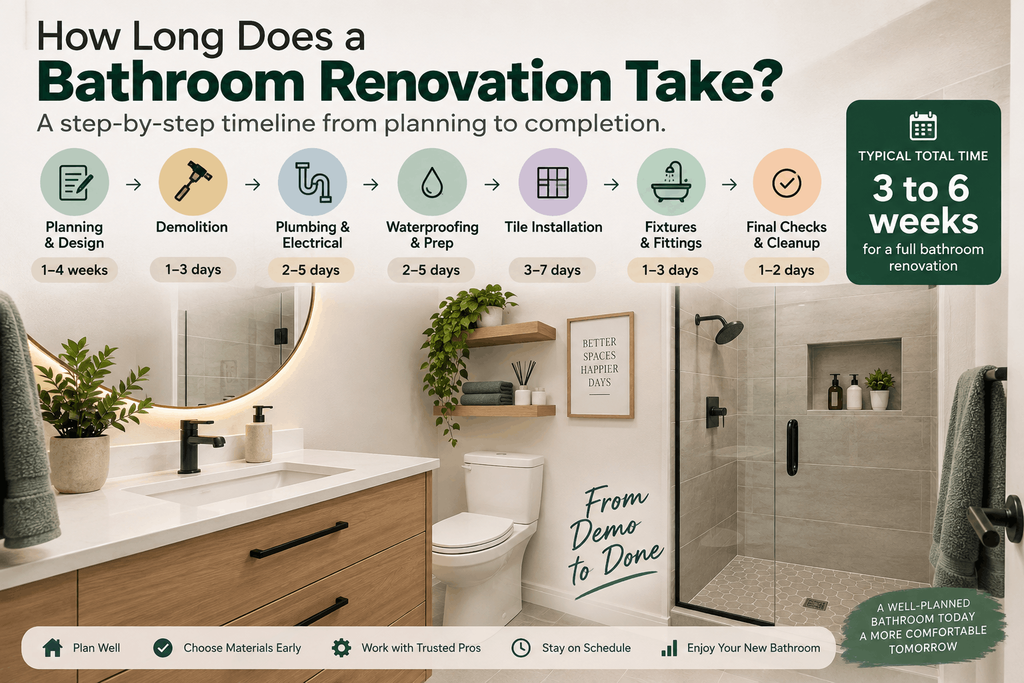
Bathroom Renovation Timeline at a Glance
The scope of work has more influence on the schedule than the size of the room alone.
| Type of Bathroom Project | Typical Active Work Time | What It Usually Involves |
|---|---|---|
| Cosmetic refresh | 2–7 days | Paint, accessories, lighting, minor fixture changes |
| Light renovation | 1–3 weeks | Vanity, toilet, flooring, fixtures and cosmetic updates |
| Standard full renovation | 3–6 weeks | Demolition, plumbing/electrical work, waterproofing, tile, fixtures |
| Major remodel | 6–10+ weeks | Layout changes, relocated plumbing, structural work, extensive tiling |
| Custom/high-end renovation | Varies considerably | Custom cabinetry, specialty finishes, complex layouts and long-lead materials |
These ranges are planning estimates rather than guarantees. Contractor availability, permit requirements, material lead times, inspection schedules and hidden problems can all change the completion date.
[Internal link opportunity: How Much Does It Cost to Renovate a Small Bathroom?]
What Does a Typical Bathroom Renovation Schedule Look Like?
A bathroom remodel happens in stages. Some stages can overlap, while others cannot begin until the previous work is complete.
1. Planning and Design
Typical timeframe: 1–4+ weeks
Before demolition, you may need to:
- decide what is being replaced;
- establish a realistic budget;
- finalize the bathroom layout;
- select tile, fixtures and finishes;
- obtain contractor quotes;
- confirm product availability;
- arrange permits where required.
A simple like-for-like renovation can move through planning relatively quickly. Moving a shower, toilet, walls or electrical points usually requires more preparation.
For custom bathrooms, planning can take longer than the physical renovation itself.
2. Ordering Materials
Typical timeframe: a few days to several weeks or more
Material availability is one of the most overlooked parts of a bathroom renovation timeline.
Standard products available locally may arrive quickly. Custom vanities, specialty tile, shower glass, imported fixtures and made-to-order cabinetry can have substantially longer lead times.
A practical approach is to have critical materials available before demolition begins whenever storage and contractor arrangements allow.
That can prevent a usable bathroom from sitting unfinished because one essential component has not arrived.
[Potential ad break]
3. Demolition
Typical timeframe: 1–3 days for many standard bathrooms
Demolition may include removing:
- the existing vanity;
- toilet;
- bathtub or shower;
- wall and floor tile;
- flooring;
- drywall or wall coverings;
- old plumbing fixtures.
A straightforward demolition can move quickly.
The schedule changes if removing finishes exposes water damage, mold-like growth, deteriorated subflooring, corroded plumbing or other conditions that require investigation and repair.
Demolition is therefore an important checkpoint in the project.
4. Structural and Framing Work
Typical timeframe: 1–4 days when required
Not every bathroom needs framing work.
This stage may be necessary if you are:
- changing the room layout;
- constructing or removing non-load-bearing partitions;
- modifying a shower enclosure;
- repairing damaged framing;
- creating niches or recessed storage.
Changes involving load-bearing walls or uncertain structural conditions should be evaluated and handled by appropriately qualified professionals.
5. Rough Plumbing and Electrical Work
Typical timeframe: 2–5 days for many projects
This is when plumbing and electrical systems are prepared before the walls and floors are closed.
Plumbing work may include supply lines, drains and connections for the toilet, vanity, bathtub or shower.
Electrical work may involve lighting, switches, outlets, ventilation and other bathroom circuits.
Keeping the existing bathroom layout generally simplifies this stage. Moving a toilet, shower or bathtub can add considerably more work because drainage and supply lines may need to be rerouted.
Electrical and plumbing work should comply with applicable local codes and should be completed by qualified professionals where required.
[Internal link opportunity: Bathroom Plumbing Cost: What Affects the Price?]
6. Inspections
Timeline: depends on local requirements and scheduling
Some bathroom renovations require inspections at particular stages before work can continue.
This creates an important distinction:
Work time is not always the same as elapsed time.
An inspection itself may be quick, but waiting for the available appointment can extend the project schedule.
Requirements vary by location and project scope, so homeowners should confirm applicable permits and inspections with the relevant local authority or qualified contractor.
7. Wall Preparation and Waterproofing
Typical timeframe: 2–5 days, depending on the system
After rough-in work is completed, walls can be closed and wet areas prepared.
A shower or other wet area may require:
- substrate preparation;
- waterproofing;
- treatment of seams and penetrations;
- required drying or curing time;
- verification before finishes are installed.
This stage should not be rushed merely to recover time lost earlier in the project.
Waterproofing errors can remain hidden behind finished tile, making later repairs disruptive and expensive.
[Internal link opportunity: Bathroom Waterproofing: What Homeowners Should Know]
8. Tile Installation
Typical timeframe: 3–7+ days
Tile is often one of the longest visible stages of a bathroom renovation.
The schedule depends on:
- room dimensions;
- amount of tiled surface;
- tile size and pattern;
- number of cuts;
- niches and corners;
- substrate preparation;
- adhesive and grout requirements.
A straightforward floor with large-format tile may progress differently from a shower with mosaics, niches, benches and detailed patterns.
Tile work also involves waiting periods between certain installation stages, depending on the products and system being used.
9. Painting and Finishing
Typical timeframe: 1–3 days
Once major wall and tile work is complete, remaining walls, ceilings, trim and other painted surfaces can be finished.
Good sequencing matters. Painting too early can result in unnecessary touch-ups after other trades return.
10. Vanity, Toilet and Fixture Installation
Typical timeframe: 1–3 days
The bathroom now begins to look finished.
Installation may include:
- vanity;
- countertop;
- basin;
- faucets;
- toilet;
- shower fittings;
- bathtub fixtures;
- lighting;
- mirrors;
- accessories.
This stage can be delayed if a missing or damaged component is discovered when its packaging is opened.
Checking delivered products before they are needed can prevent this problem.
[Potential ad break]
11. Shower Glass and Final Details
Typical timeframe: 1–3 days for installation, but fabrication can add lead time
Custom shower glass deserves special attention.
In some projects, accurate final measurements cannot be taken until tile installation is complete. The glass may then need to be fabricated before installation.
The actual fitting may be quick, but the period between measurement and installation can create a gap near the end of the renovation.
This is a good example of why a project can contain relatively few working days but still span several weeks.
12. Final Inspection, Testing and Cleanup
Typical timeframe: 1–2 days
Before treating the bathroom as complete, check:
- faucets for proper operation;
- visible plumbing connections for leaks;
- toilet operation;
- shower drainage;
- lighting and ventilation;
- doors and drawers;
- sealant and grout details;
- tile and finish quality;
- installed accessories;
- remaining touch-ups.
Where a formal final inspection is required, it should also be completed.
Example: A 4-Week Bathroom Renovation Schedule
A relatively straightforward full renovation might look like this:
| Period | Main Work |
|---|---|
| Days 1–2 | Demolition |
| Days 3–5 | Framing and rough plumbing/electrical |
| Days 6–8 | Required checks, wall preparation and waterproofing |
| Days 9–14 | Tile installation and associated curing/drying periods |
| Days 15–17 | Painting and finishing |
| Days 18–20 | Vanity, toilet, fixtures and lighting |
| Days 21–22 | Shower glass/final installations if ready |
| Days 23–24 | Testing, touch-ups and cleanup |
This is an illustrative sequence, not a promise that every bathroom can be completed in 24 working days. Inspection delays, product requirements and contractor scheduling can alter the sequence considerably.
What Can Make a Bathroom Renovation Take Longer?
Several factors can turn a three- or four-week project into a much longer renovation.
Moving the Plumbing
Keeping the toilet, shower, bathtub and vanity in roughly their existing locations generally reduces complexity.
Moving them can require alterations to drainage, water supply and surrounding construction.
Hidden Water Damage
Removing a shower or floor may reveal damaged materials that were invisible before demolition.
The cause should be identified and corrected before new finishes cover the area.
[Internal link opportunity: Signs of a Hidden Water Leak in Your Home]
Material Delays
A bathroom can be nearly finished yet remain unusable because one critical item has not arrived.
Common scheduling bottlenecks can include custom cabinetry, specialty tile, countertops and shower glass.
Custom Features
Detailed tile layouts, recessed niches, custom storage, built-in benches and unusual fixture configurations generally require more labor than standard installations.
Permit and Inspection Delays
Where permits or inspections apply, the contractor may have to wait before covering completed work or moving to the next stage.
Changing the Design During Construction
Late changes can affect several trades at once.
For example, changing the vanity after rough plumbing has been completed could affect plumbing locations, electrical placement, countertop measurements and delivery schedules.
The earlier major decisions are finalized, the easier the project is to sequence.
How Long Does a Small Bathroom Renovation Take?
A small bathroom is not automatically a fast bathroom renovation.
It may require fewer square feet of tile and less painting, but many of the same trades are still involved:
- demolition;
- plumbing;
- electrical work;
- waterproofing;
- tiling;
- fixture installation.
A small full bathroom renovation can therefore still take roughly 2–5 weeks of active work, depending on scope.
The main time saving usually comes from simplicity rather than square footage.
A small bathroom with an unchanged layout and readily available materials can move relatively quickly. A small bathroom with relocated plumbing and elaborate tile work may take longer than a larger but simpler bathroom.
Renovation vs. Remodel: Why the Timeline Can Be Different
A cosmetic renovation generally updates the existing bathroom without fundamentally changing how the room works.
A major remodel may change the layout itself.
For example:
Renovation: Replace the old vanity with a new vanity in the same location.
Remodel: Move the vanity to another wall, relocate plumbing and electrical connections, and change the room layout.
The second project creates dependencies between multiple trades, which usually increases both construction time and the possibility of delays.
How to Keep Your Bathroom Renovation on Schedule
You cannot eliminate every delay, but you can remove many avoidable ones.
Before demolition:
- finalize the layout;
- choose fixtures and finishes;
- confirm dimensions;
- verify product availability;
- inspect delivered items for damage;
- understand permit requirements;
- agree on the scope with the contractor;
- identify who is responsible for ordering each item;
- establish how unexpected work will be approved.
During construction:
- make decisions quickly when unexpected conditions appear;
- avoid unnecessary design changes;
- keep communication with the contractor clear;
- confirm upcoming materials are ready before each installation stage.
One of the most useful questions to ask your contractor is:
“What item or decision could stop the next stage from starting?”
That question focuses attention on dependencies rather than simply asking whether the project is “on schedule.”
[Potential ad break]
Should You Move Out During a Bathroom Renovation?
Not necessarily.
If your home has another fully functioning bathroom, remaining in the property may be practical.
If you are renovating the home’s only bathroom, the situation requires more planning. There may be periods when the toilet, shower or water supply is unavailable.
Before work begins, ask the contractor:
- how long the toilet will be unavailable;
- whether water will be shut off to the whole property;
- how frequently shutoffs are expected;
- when the shower will become usable;
- whether there will be days when the bathroom cannot be accessed at all.
Do not assume the room will become fully functional immediately after fixtures are installed. Sealants, finishes or other materials may require time before normal use.
A Better Way to Estimate Your Own Bathroom Timeline
Instead of asking only, “How many weeks will this take?”, divide the project into three parts:
A. Pre-construction time
Count:
- design;
- contractor selection;
- permits;
- ordering;
- delivery.
B. Active construction time
Count:
- demolition;
- rough-in work;
- waterproofing;
- tiling;
- finishing;
- fixture installation.
C. Waiting and contingency time
Allow for:
- inspections;
- curing and drying;
- custom fabrication;
- delayed deliveries;
- hidden repairs;
- scheduling between trades.
For example, a contractor may estimate four weeks of construction, but that does not necessarily mean the bathroom will be complete four weeks after you first decide to renovate.
When Is a Bathroom Renovation Actually Finished?
A bathroom should not be considered finished merely because the toilet, vanity and shower are installed.
A proper completion check should cover:
- plumbing operation;
- drainage;
- visible leaks;
- electrical fixtures;
- ventilation;
- doors and cabinetry;
- sealant;
- grout;
- paint touch-ups;
- damaged or missing components;
- cleanup;
- required final inspections.
Create a written list of incomplete or defective items and review it with the contractor before final sign-off.
Frequently Asked Questions
1. Can a bathroom be renovated in one week?
A basic cosmetic update may be completed within a week, particularly when the layout remains unchanged and materials are ready. A full renovation involving demolition, plumbing, electrical work, waterproofing and tile usually requires more time.
2. How long does it take to renovate a small bathroom?
A straightforward small bathroom renovation may take around 2–5 weeks of active work. Changing the layout, moving plumbing, installing complex tile or discovering hidden damage can extend the schedule.
3. What part of a bathroom renovation takes the longest?
There is no single longest stage for every project. Tile work, waterproofing, custom fabrication, inspections and material lead times can all become schedule bottlenecks. Custom shower glass can also extend the final stage when measurements must be taken after tile is installed.
4. How long should a full bathroom remodel take?
A standard full remodel commonly requires roughly 3–6 weeks of active construction. More complex projects involving structural work, relocated plumbing, custom finishes or scheduling delays may take 6–10 weeks or longer.
5. Can I use my bathroom while it is being renovated?
Usually not throughout the entire renovation. Demolition and work on the toilet, plumbing, shower, flooring or electrical systems can make the room temporarily unusable. Ask your contractor exactly when essential fixtures will be unavailable.
6. What causes bathroom renovations to be delayed?
Common causes include late materials, hidden water damage, design changes, permit or inspection scheduling, custom fabrication, trade availability and additional plumbing, electrical or structural work discovered after demolition.
Suggested Internal Links
Anchor: “small bathroom renovation cost”
Suggested article: How Much Does It Cost to Renovate a Small Bathroom?
Anchor: “bathroom plumbing cost”
Suggested article: Bathroom Plumbing Cost: What Affects the Price?
Anchor: “bathroom waterproofing”
Suggested article: Bathroom Waterproofing: What Homeowners Should Know
Anchor: “signs of a hidden water leak”
Suggested article: How to Tell If You Have a Hidden Water Leak
Anchor: “bathroom remodeling budget”
Suggested article: How to Budget for a Bathroom Renovation
